
VanLife NZ
In Jan 2020, I left…
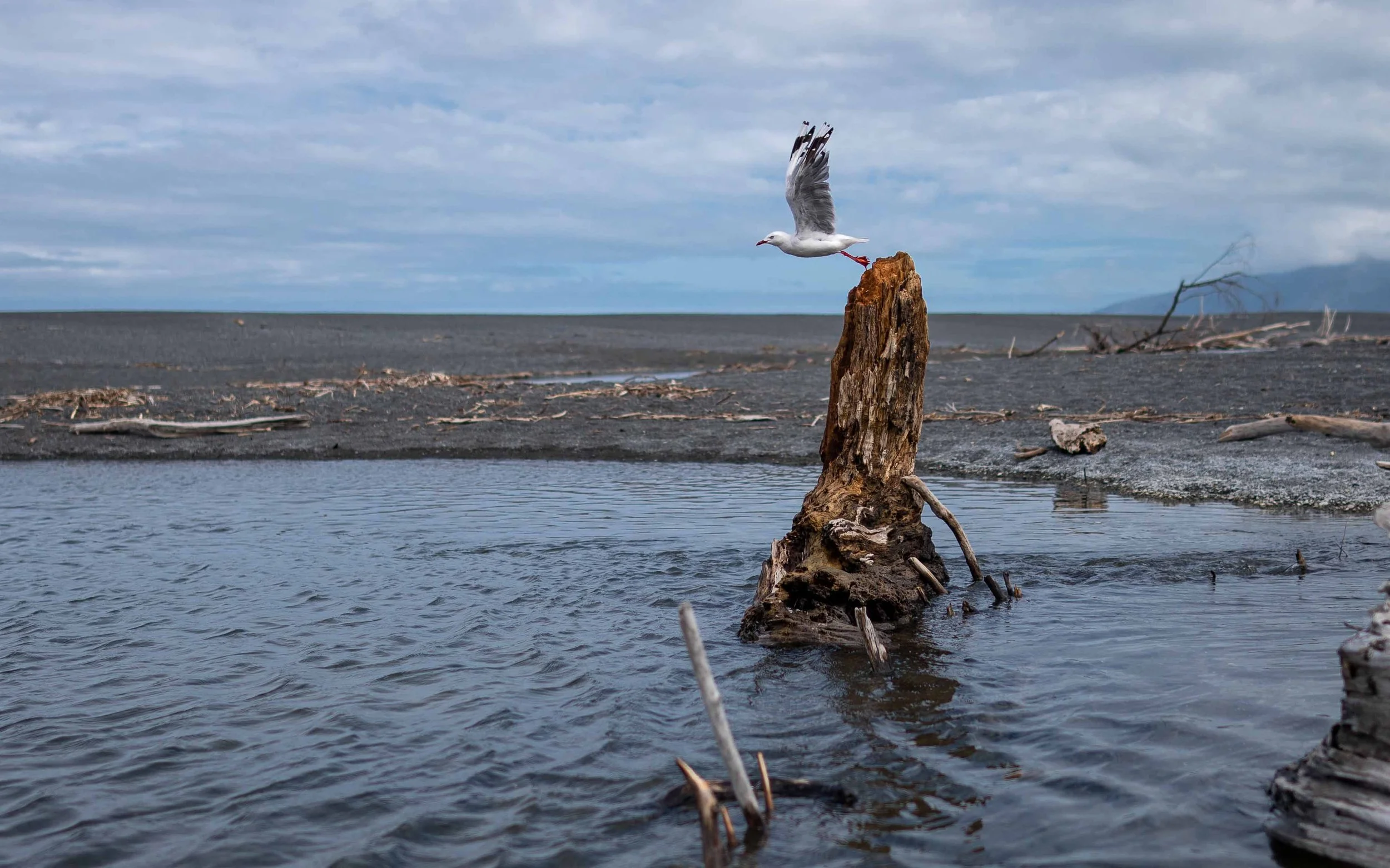
… central London's quotidian niceties to spend a year traversing New Zealand in a converted van. Towards the bottom of the North Island is Lake Onoke, sequestered from the ocean by a long spit - a dune of rock and coral debris. Like the land itself, New Zealand's wilderness has been gradually eroded since the arrival of humans* and continues to be so by those who come to seek the beauty that survives when left isolated. Driftwood thrown up by storms lines the spit, the Red-billed gull flies over the geothermal debris, just as we dream of surmounting our own obstacles and pasts. The spit is a brief respite before they continue their journey and us, ours.
These New Zealand islands are caving to human pressures, with 90% of wetlands, crucial for migration, converted into farmland or settlement. Overfishing, agricultural runoff, logging and other activities are degrading biodiversity and endemic ecosystems.
Currently, 4000 species are under threat of extinction, and almost half of all bird species have disappeared since humans settled in the 13th-century. A trend amplified by the 19th-century arrival of Europeans. Fur seals were taken for food and fur, while cormorants were shot by fishermen who perceived the prehistoric species as competition and a menace to introduced trout populations. Penguins are another example of native fauna that evolved without predatory terrestrial mammals. As such, the arrival of dogs and other land-based predators has driven down their numbers, along with boats and loose netting, in a textbook example of anthropogenic diversity loss.
The Department of Conservation was founded in 1987, charged with conserving New Zealand’s natural and historic heritage. Aotearoa’s biosecurity is one of the strictest in the world, and visitors to these incredible islands are made aware of its fragility. Still, coastal development continues, and economic pressures persist.
I aspire to bear witness to advancements and devastation, and by so doing, redirect toxic nationalism into a passion for supporting our ecosystems.
Tourism is not inherently negative -- while over-tourism damages landscapes, ecotourism benefits local people and the environment in tandem. I want to ensure that beauty endures, allow lessons to be carried on, and protect this world if I can.
*Polynesians, the ancestors of the Māori, arrived in New Zealand (Aotearoa) between 1250 and 1300 AD. Europeans first sighted New Zealand in 1642 when Dutch explorer Abel Tasman spotted the west coast of the South Island, though he didn't land, and the first European to land and circumnavigate the islands was British explorer James Cook in 1769.